

Processing grief means making space for what was lost while also learning how to continue living now. Not all grief is traumatic, but trauma often carries grief because something has been lost, such as safety, trust, identity, connection, or life itself. Trauma recovery includes moving between loss-oriented and restoration-oriented coping.
Not all grief is traumatic, but all trauma carries grief
When trauma occurs, something is lost. It may be safety, trust, part of yourself, a belief about yourself or the world, or sometimes life itself.
That’s why grief deserves attention in trauma recovery. It may not always look like crying or talking about the loss. For first responders and veterans, it shows up as numbness, anger, avoidance, guilt, isolation, or the feeling that life has changed in a way you can’t fully explain.
What gets lost when trauma happens
Grief is a shared human experience, but it still feels deeply isolating because each person processes loss differently.
Even when two people share the same loss, their grief may look different. One may talk, while another shuts down. One may feel sadness, while another feels anger, numbness, guilt, or confusion.
When trauma is involved, grief can be harder to recognize because the loss isn’t always visible. A person may not think, “I’m grieving.” They may think, “I’m different now,” “I don’t feel safe,” or “I don’t know who I am anymore.”
Those are losses too.
Why does grief feel isolating
Grief feels isolating because it doesn’t move through everyone the same way. Someone else may seem to move forward while you feel stuck. Someone else may cry while you feel numb. None of these responses means someone is grieving right or wrong.
For first responders and veterans, grief feels even harder to name. You may be used to staying steady under pressure, but grief often asks for something different: attention, honesty, patience, and support.
How grief models help
Grief models help identify common patterns, but they don’t tell you exactly how your grief should look or how long it should last.
Instead, they give language to what you’re experiencing. They help you notice where you may feel stuck and what kind of movement might help. In trauma recovery, that clarity makes grief feel less confusing and less isolating.
One helpful model is the Dual Process Model of Grief.
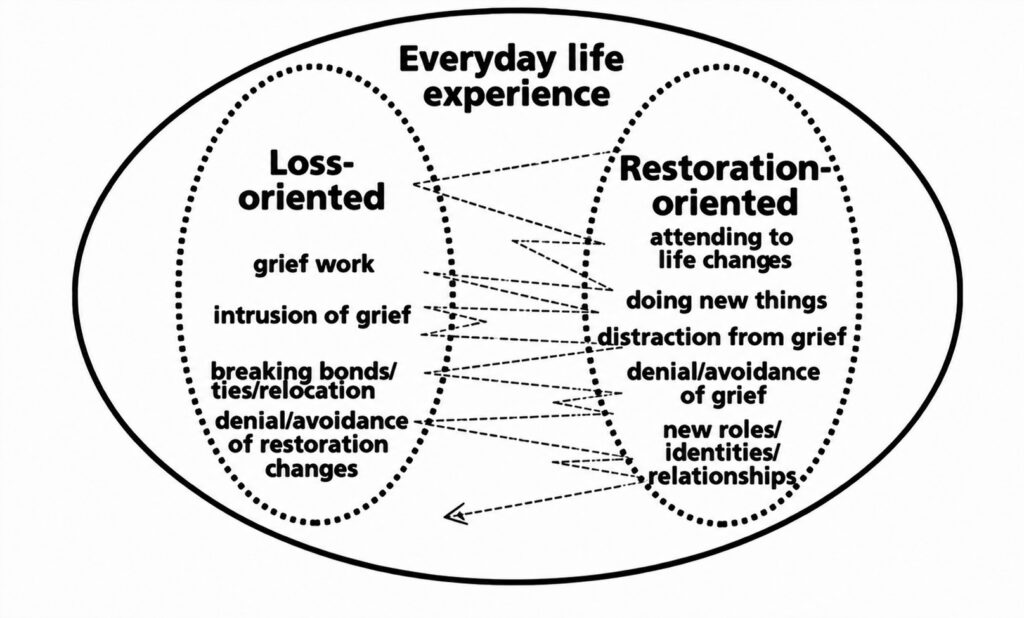
The Dual Process Model of Grief
The Dual Process Model of Grief, developed by Margaret Stroebe and Henk Schut in 1999, explains grief as a process through two states: loss-oriented and restoration-oriented.
Rather than moving through fixed stages, grief often moves back and forth. One day, you may feel focused on the loss. Next, you may focus on life now. That shift doesn’t mean you’re doing grief wrong. Both states are part of the grieving process.
What loss-oriented coping looks like
Loss-oriented coping focuses on the past and the pain of what was lost. It may include missing your old life, feeling sadness, anger, guilt, or numbness, denying what happened, resisting change, or trying to understand what the loss means now.
For a first responder or veteran, this may mean replaying a call, a deployment, an injury, a death, or a moment that changed how life feels. Processing grief requires room for this side of the experience.
What restoration-oriented coping looks like
Restoration-oriented coping focuses on the future and the changes that come after loss. It may include new routines, responsibilities, relationships, therapy, work, family life, or the daily tasks that continue while grief is present.
This isn’t always avoidance. Sometimes, people need breaks from grief to keep living. But staying busy all the time becomes a way to avoid the loss, keeping someone stuck.
How everyday life experiences shape grief
“Everyday life experience” is central to the Dual Process Model because grief doesn’t happen outside of life. It happens while you’re working, caring for family, making decisions, trying to sleep, and handling daily responsibilities.
That’s why processing grief feels uneven. Life doesn’t pause for grief to unfold neatly. For first responders and veterans, it may show up between shifts, after a difficult call, during family dinner, or in quiet moments at night.
What happens when you get stuck
The Dual Process Model suggests that processing grief means spending time in both states. You need room to acknowledge the loss and room to engage with life now.
You get stuck if you stay in only one state. If you’re mostly loss-oriented, you may replay the past, isolate, resist change, or feel unable to move forward. If you’re mostly restoration-oriented, you may stay busy, avoid reminders, and push through without giving grief space.
A helpful self-check is to ask:
- What part of me is loss-oriented right now?
- What part of me is restoration-oriented right now?
- Which part is taking up more space?
- What might those parts need to say to each other?
- Do I need more balance in my grief process?
Ways to find more balance in your grief process
If you’re stuck in loss, try one restoration-oriented step. This doesn’t mean ignoring grief. It means reconnecting with life now.
You might:
- Reach out to someone you haven’t spoken to in a while.
- Make a plan for the future, so you have something to look forward to.
- Answer the journal prompt: “Who am I now?”
When restoration keeps you moving but not feeling, take one loss-oriented step. This means giving grief space instead of pushing it away.
You might:
- Attend a support group.
- Bring up grief in therapy.
- Read a book about grief.
- Honor something or someone you lost.
- Eat a favorite food of someone who died.
- Set an extra plate at dinner.
- Acknowledge someone you lost in a personal, honest way.
How grief connects to trauma recovery
Grief is a part of trauma recovery because trauma often involves loss. That loss may be clear, or it may show up through anxiety, depression, anger, numbness, sleeplessness, isolation, substance use, or difficulty connecting with family.
For first responders and veterans, these symptoms may connect to service-related trauma, cumulative stress, moral injury, or losses that haven’t had enough room to be processed. A trauma rehab center helps address the grief, trauma, or pain underneath the visible symptoms.
FAQ
Is all grief traumatic?
No. Trauma often carries grief, even when the grief itself doesn’t come from a traumatic loss, because trauma takes something from you. That loss may include safety, trust, identity, connection, a belief about yourself or the world, or someone’s life.
Can trauma cause grief even if no one died?
Yes. Trauma creates grief around losses that aren’t always visible. Someone may grieve their old life, their sense of safety, their trust in others, or the version of themselves they knew before trauma happened.
What does processing grief mean?
Processing grief means making space for the loss while also finding ways to continue living now. The Dual Process Model describes this as movement between loss-oriented coping and restoration-oriented coping.
What is loss-oriented coping?
Loss-oriented coping means focusing on the past, missing the old life, feeling the pain of grief, denying what happened, resisting change, or doing the emotional work needed to process the loss.
What is restoration-oriented coping?
Restoration-oriented coping means focusing on the future, adjusting to life changes, trying new things, taking breaks from grief, and finding a way to continue living now.
When should someone get support for grief after trauma?
Support is helpful when grief feels stuck, isolating, or connected to anxiety, depression, substance use, PTSD, anger, sleep problems, or difficulty functioning. A trauma rehab center can help when grief and trauma drive deeper symptoms.

Processing grief with support from Deer Hollow Recovery
Processing grief doesn’t mean choosing between honoring what was lost and moving forward. It means learning how to move between both. Some days may be more loss-oriented. Others may be more restoration-oriented. The goal isn’t perfection. The goal is movement, awareness, and support.
For people in trauma recovery, grief may be part of what needs care. Deer Hollow Recovery provides trauma-first support for first responders and veterans carrying trauma, grief, PTSD, addiction, or mental health challenges. Start with a confidential conversation to learn what support could look like.

Google Business Profile summary
Grief after trauma includes more than the loss of a person. It involves the loss of safety, trust, identity, connection, or the life someone had before trauma.
The Dual Process Model of Grief explains that people often move between two states: loss-oriented coping and restoration-oriented coping. One focuses on what was lost. The other focuses on life now. Processing grief means making space for both.
Deer Hollow Recovery helps first responders and veterans address grief, trauma, PTSD, addiction, and mental health challenges through trauma-first care. CTA: Talk to someone who understands.